How a Transport Management System in India is Transforming Logistics Efficiency in 2026
26 May 2026
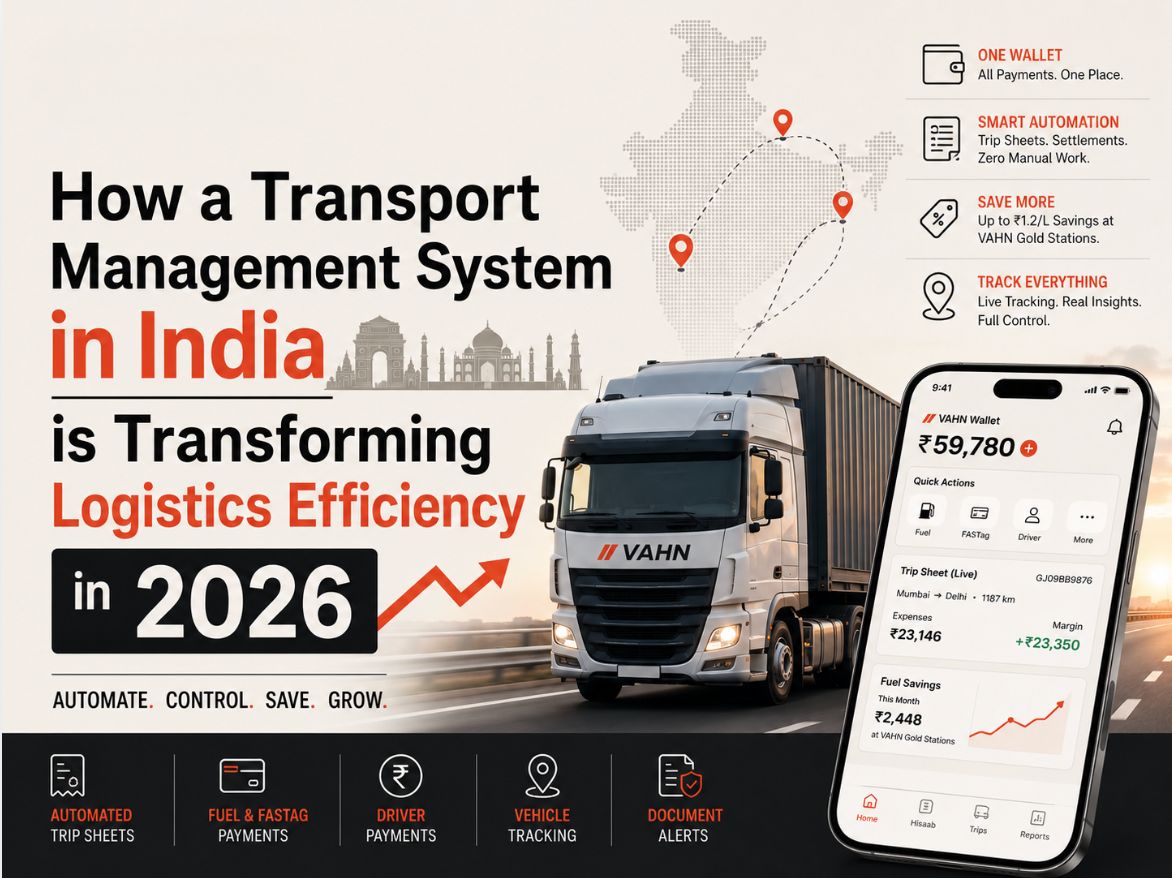
How a Transport Management System in India is Transforming Logistics Efficiency in 2026
India’s logistics industry is changing rapidly in 2026. What was once managed through phone calls, handwritten trip sheets, and manual accounting is now becoming digital and data-driven. Rising fuel prices, increasing customer expectations, and tighter delivery timelines are forcing transport businesses to operate more efficiently than ever before.
This is where a transport management system india businesses can rely on is making a huge difference.
From live vehicle tracking and automated trip sheets to FASTag integration and fuel management, technology is helping transport companies reduce costs, improve visibility, and increase profits. Logistics today is no longer just about moving goods — it is about managing operations smarter and faster.
Why Logistics Businesses Need Smarter Systems
India has one of the largest road transport networks in the world. Every day, millions of trucks move goods between factories, warehouses, ports, and cities. Despite this scale, many transport businesses still struggle with:
High fuel costs
Delayed deliveries
Poor vehicle visibility
Manual paperwork
Driver coordination issues
Toll and FASTag reconciliation
Compliance management
Traditional systems make these problems worse because they rely heavily on manual processes.
A modern transport management system india fleet operators use today helps solve these issues by bringing all operations into one connected platform.
Real-Time Tracking is Improving Fleet Visibility
One of the biggest transformations in logistics in 2026 is real-time vehicle tracking.
Earlier, transporters depended on constant phone calls to know where trucks were located. This created delays and communication gaps. Today, GPS-enabled transport systems provide live tracking and complete visibility.
Fleet owners can now:
Monitor truck movement live
Track stop and idle time
Identify delays instantly
Improve delivery planning
Share accurate ETAs with customers
This helps businesses respond faster and improve customer trust.
A reliable transport management system india companies implement today allows transporters to manage fleets proactively instead of reacting after problems occur.
Fuel Management Has Become Smarter
Fuel is one of the biggest expenses in transportation. Even small fuel leakages can reduce profits significantly over time.
Modern fleet systems now help businesses:
Track fuel usage
Manage fuel cards
Monitor mileage
Control fuel limits
Detect unusual fuel activity
Many platforms also provide access to discounted fuel networks and centralized payment systems.
The VAHN fleet platform highlights fuel savings opportunities through connected fuel station systems and integrated fuel tracking.
A smart transport management system india businesses use today helps reduce unnecessary fuel expenses and improve accountability.
Automated Trip Sheets are Reducing Manual Work
Manual trip sheets often lead to:
Missing expense entries
Accounting errors
Delayed reporting
Inaccurate calculations
In 2026, automated trip sheets are becoming standard in fleet operations.
Digital systems can now automatically calculate:
Fuel expenses
Toll charges
Driver payments
Miscellaneous costs
Trip profitability
This gives fleet owners better financial visibility.
The VAHN platform includes AI-estimated trip expenses and automated expense management connected directly to trip sheets.
An efficient transport management system india logistics companies use today helps reduce paperwork and improve operational accuracy.
FASTag and Digital Payments are Simplifying Operations
Managing cash has always been a major challenge for transport businesses. Drivers often carry cash for:
Fuel
Tolls
Repairs
Driver allowances
Vendor payments
This creates accounting issues and financial risks.
Modern transport systems now support:
FASTag management
Fuel card payments
Driver account transfers
Merchant payments
Digital wallets
These features improve transparency and reduce manual reconciliation.
The VAHN platform combines FASTag payments, fuel transactions, and driver payments within one centralized ecosystem.
A connected transport management system india fleet businesses adopt today improves operational efficiency and financial control.
AI and Automation are Improving Decision-Making
Artificial intelligence is playing a bigger role in logistics in 2026.
AI-powered fleet systems now help businesses with:
Route optimization
Fuel estimation
Expense analysis
Maintenance alerts
Driver performance monitoring
Instead of relying only on manual calculations, fleet owners now have access to real-time operational insights.
For example:
Fuel irregularities can trigger alerts
Preventive maintenance reminders can reduce breakdowns
Inefficient routes can be optimized automatically
A powerful transport management system india companies implement today helps businesses make faster and smarter decisions.
Digital Documentation is Reducing Compliance Problems
Transport businesses manage several important documents such as:
Registration certificates
Insurance papers
Pollution certificates
Permits
PODs and invoices
Managing these manually often creates delays and compliance risks.
Digital fleet platforms now provide:
Document expiry alerts
Cloud document storage
Easy uploads
Centralized access
The VAHN platform includes document expiry alerts and digital uploads for PODs, invoices, and trip documents.
A modern transport management system india businesses rely on today helps simplify compliance management.
Driver Management is Becoming More Efficient
Drivers are the backbone of logistics operations. Technology is now helping transport businesses improve communication and coordination with drivers.
Modern systems provide:
Driver mobile apps
Trip updates
Digital payment visibility
Trip history access
FASTag and fuel balance tracking
The VAHN driver app allows drivers to upload documents, access trip details, and manage operational tasks directly from mobile devices.
A reliable transport management system india transporters use today improves both driver productivity and operational efficiency.
Small Fleet Owners are Also Adopting Technology
One major shift in 2026 is that logistics technology is no longer limited to large transport companies.
Small and medium fleet owners are now using:
GPS tracking
Automated reporting
Fuel management systems
Digital payment tools
Trip management software
Technology has become more affordable and mobile-first platforms are easier to use.
A scalable transport management system india businesses adopt today allows even smaller fleet operators to improve efficiency and compete more effectively.
The Future of Logistics in India
India’s logistics industry is becoming more technology-driven every year. Over the next few years, the industry is expected to see:
AI-powered fleet optimization
Predictive maintenance systems
IoT-enabled vehicle tracking
Paperless transport operations
Integrated payment ecosystems
Technology is no longer optional in logistics. It is becoming the foundation of efficient fleet management.
Businesses that adopt digital systems early will gain:
Better operational control
Reduced costs
Improved customer trust
Faster scalability
Why Platforms Like VAHN are Relevant in 2026
As India’s logistics industry evolves, platforms like VAHN are becoming increasingly relevant for modern transport businesses.
VAHN brings together multiple fleet management functions into one connected platform, including vehicle tracking, automated trip sheets, FASTag payments, fuel management, driver payments, and document expiry alerts.
What makes solutions like VAHN important in 2026 is their focus on solving real operational challenges faced by Indian transporters. Instead of managing different tools separately, fleet owners can access operational visibility, payments, tracking, and reporting from one system.
As logistics becomes more data-driven and efficiency-focused, platforms like VAHN reflect the future of smarter and more connected fleet management in India.